Air duct cleaning Long Island cost is one of the most-searched home service questions in Nassau and Suffolk County, and the pricing range you'll see online is wide enough to be nearly useless: $99 specials on one end, $2,000-plus estimates on the other. The gap is real, and it matters. Most of it comes down to whether a company is doing the actual NADCA-certified process or something that looks like cleaning but isn't. This guide gives you honest numbers for what Long Island homeowners should expect to pay in 2026, what drives the cost up, and what you should get for your money.
Why Long Island homes need duct cleaning more than most
Long Island's housing stock is predominantly 1950s through 1985 construction. The dominant types — post-war capes in Levittown and Hempstead, split-levels across Nassau, colonials from Smithtown to Commack — were built with duct systems that in many cases have never been professionally cleaned. When we scope these systems on camera, heavy debris accumulation is the rule, not the exception.
The specific environment adds to the load. South Shore properties from Freeport to Babylon deal with South Shore humidity and salt-air coil fouling. North Shore communities like Syosset and Huntington have heavy pollen seasons driven by mature oak and maple canopy. Pet ownership is high across Nassau County, and pet dander is one of the fastest-accumulating contaminants in return air plenums. The cumulative result: Long Island HVAC systems build up debris faster than the national average, and the consequences — worsened allergies, reduced HVAC efficiency, musty air, higher energy bills — show up sooner.
Factors that affect air duct cleaning cost on Long Island
Home size and vent count
The biggest single driver of price is how many vents and how many zones the system has. Most Long Island contractors price by vent count and zone count, not square footage alone. A 2,000 sq ft ranch with 12 supply registers and one HVAC zone costs less than a 2,000 sq ft bi-level with 18 registers across two zones. Expect to pay roughly $25–$45 per additional vent above the base quote for a full NADCA-process clean.
Number of HVAC zones
Single-zone homes are the most affordable and most common in older Nassau stock. Two-zone homes — standard in most Plainview and Massapequa colonials — add 30–50% to the job time and cost. Three-zone homes, which are common in larger Syosset colonials and Suffolk County estates, run significantly more. Our Syosset jobs with three zones average 5–7 hours with a two-tech crew — that's reflected in the price.
Duct material and age
Original galvanized sheet-metal ductwork from 1950s–70s homes is structurally sound but accumulates debris differently than newer flex duct. Older trunk-and-branch systems require more careful negative-air placement and brush work. Flexible duct in poor condition — crushed, kinked, or deteriorated — may need replacement rather than cleaning, which is a separate cost. We identify these issues on the camera scope before we quote.
Degree of contamination
A home that had a recent renovation, a finished-basement flood, a high-shedding pet for 10 years, or simply has never been cleaned since a 1960s build takes longer and costs more than a home that was cleaned 3 years ago and stays current on filters. Heavy debris jobs can add 1–2 hours to the schedule. We show you what we find on camera before we quote — you see the inside of your ducts on a tablet before we charge you for anything.
Dryer vent add-on
Dryer vent cleaning is a common and worthwhile add-on, especially for the split-level and ranch homes that make up most of our Long Island schedule. When booked with a duct cleaning job, it typically runs $100–$160 since the crew is already there. Standalone dryer vent cleaning runs $149–$229. If the vent run has crushed sections of flexible duct that need replacement with rigid aluminum, add $85–$175 per section. A blocked dryer vent is one of the leading causes of residential fires — we find crushed or partially blocked vents on the majority of Lindenhurst, Ronkonkoma, and Levittown homes we visit for the first time.
Typical air duct cleaning cost ranges on Long Island (2026)
These are real-world price ranges for NADCA-certified cleaning — the full process with HEPA negative-air machine, rotary brush of every supply and return, and camera-scope documentation.
- Standard single-zone home, 12–16 vents: $300–$550
- Two-zone home, 16–24 vents: $500–$750
- Large home or heavy contamination (three zones, 24+ vents): $800–$1,500
- Add dryer vent cleaning (bundled): +$100–$160
- Add dryer vent cleaning (standalone): $149–$229
- Total with dryer vent, typical two-zone home: $450–$900
- HVAC system deep clean (coils, blower, drain pan): $385–$775 per system — this is separate from duct cleaning
For context: a single-family home in Hempstead or Patchogue with one zone and 14 vents typically comes in at $329–$499. A larger Garden City Tudor with a custom multi-zone HVAC retrofit runs $549–$749. A three-zone Syosset colonial that hasn't been cleaned since the 1990s oil-to-gas conversion can legitimately run $950–$1,400 once debris level is accounted for.
What a legitimate Long Island duct cleaning includes
The NADCA-certified process has specific requirements. Here's what you should get:
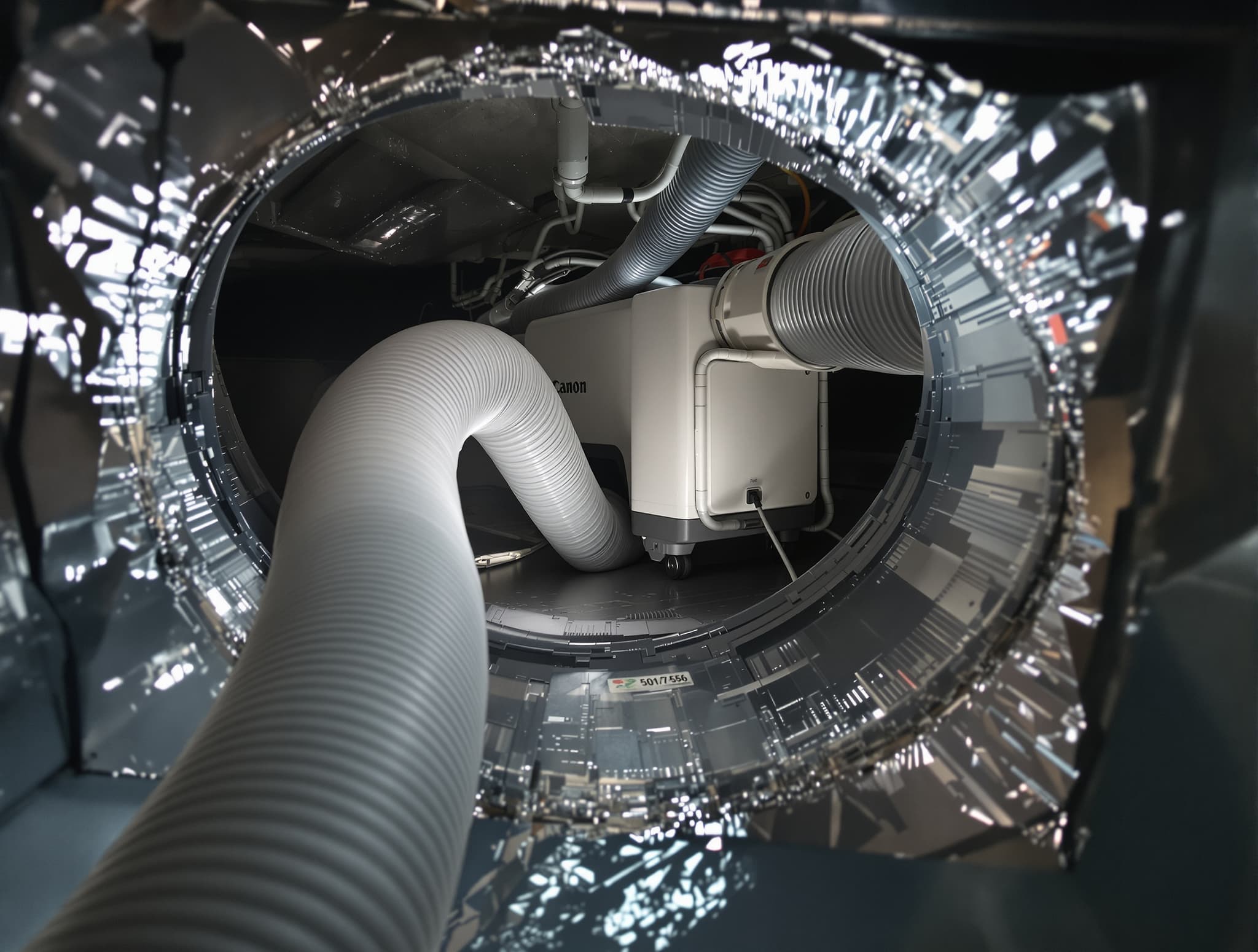
- Camera scope inspection of the main trunk lines and return plenum before work begins — you see what's in there before we quote
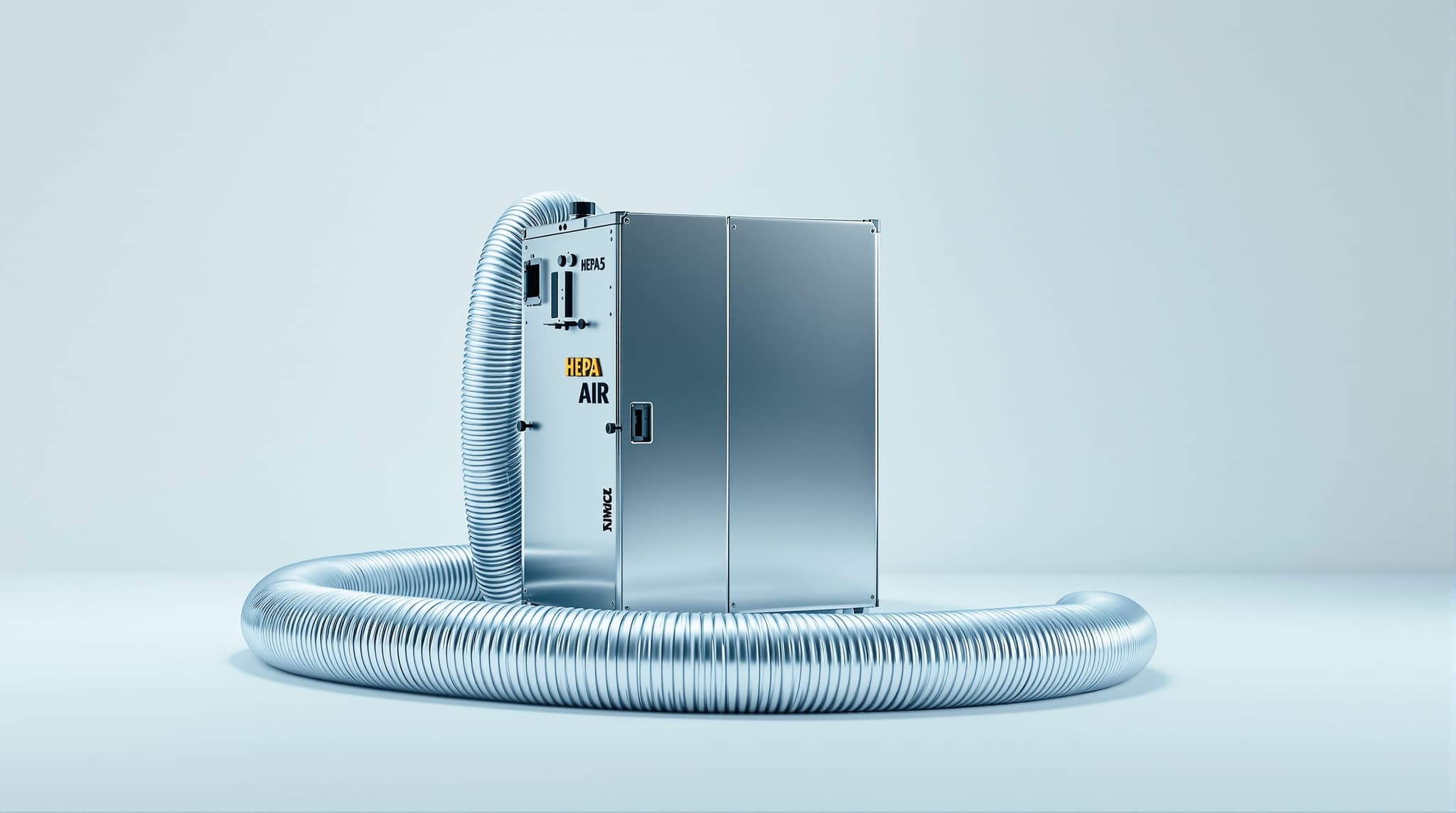
- Commercial HEPA negative-air machine connected to the return plenum, filtering at 99.97%, exhausting outside the house
- Rotary brush or air-whip agitation of every supply and return register — not just the ones you can see from the sofa
- Access port installation if needed to reach blocked trunk sections
- Before-and-after camera scope video archived to a shared folder
- Printed NADCA-style report delivered same day
What is not included in a standard duct cleaning: HVAC coil cleaning, blower wheel cleaning, drain pan treatment, or any duct repair work. Those are separate services with separate pricing. The HVAC system deep clean (coils, blower, plenum) adds $385–$775 per system and is worth booking at the same time since you avoid a second mobilization fee.
How often to clean air ducts on Long Island
NADCA recommends every 3–5 years for most homes. In practice, Long Island-specific factors push many homeowners toward the 3-year end:
- Coastal homes within 5 miles of the Sound or ocean (Long Beach, Oceanside, Bay Shore) should clean HVAC coils every 2–3 years due to accelerated salt-film buildup
- Pet-owning households and homes with allergy sufferers: every 2–3 years regardless of location
- Homes that had a renovation, water intrusion, or oil-to-gas conversion: clean within 6 months of the event
- First-time cleaning on a pre-1990 home: after the initial clean, move to the 3–5 year cycle
Why EPA and NADCA certification matter
NADCA ASCS (Air Systems Cleaning Specialist) certification means the technician has passed an accredited exam in air system cleaning and follows the NADCA ACR2021 standard — the document that defines what "clean" means for residential and commercial HVAC ductwork. The exam covers source removal methods, contamination assessment, EPA-registered antimicrobial use, and documentation requirements.
EPA registration matters specifically for antimicrobial treatments applied to drain pans and duct surfaces. Any contractor applying antimicrobials in your home is legally required to use EPA-registered products and follow label instructions. In Nassau and Suffolk County, contractors are also required to hold a Home Improvement Contractor (HIC) license for any service that involves access to HVAC systems. Ask to see both the NADCA ASCS card and the HIC license number before you book.
How to choose a duct cleaning contractor on Long Island
The duct cleaning industry on Long Island has a well-documented bait-and-switch problem. The $99 special companies advertise a base price, then upsell aggressively on-site: UV lights you don't need, "deodorizing" charges, duct sealing that wasn't in scope. Here's how to avoid getting burned:
- Get a written scope before you book. The scope should specify the process (negative-air machine, rotary brush, vent count), what's included, and what's extra. If the company won't put it in writing, that tells you something.
- Ask for the NADCA ASCS certificate number. The NADCA member directory at nadca.com lets you verify certification status directly. If the company can't provide a certificate number, they're not NADCA certified.
- Ask for Nassau or Suffolk HIC license number. Required by law. Unverifiable license numbers are a red flag.
- Ask what size negative-air machine they use. A legitimate duct cleaning uses a commercial 2,000+ CFM negative-air machine connected to the return plenum. A shop-vac adapter at each vent is not the NADCA process.
- Ask for camera-scope documentation. Before-and-after video of key trunk lines is standard on legitimate jobs. If the company doesn't do camera scope, you have no way to verify the work was done.
We are NADCA ASCS certified, EPA registered, IICRC certified for mold work, and BBB A+ accredited. Nassau HIC #H1851900000, Suffolk HIC #60847-H. Every job includes a camera-scope before-and-after video and a printed NADCA-style report. We do a free on-site scope visit before we quote — you see the inside of your ducts on a tablet before we start. Call or text Maria to book your free scope, or use the online price calculator for a rough estimate before scheduling.
Frequently asked questions about air duct cleaning cost on Long Island
What is the average cost of air duct cleaning on Long Island?
For a typical Long Island home — a 1,600–2,500 sq ft colonial or split-level with one HVAC zone — expect to pay $300–$650 for a standard NADCA-certified duct cleaning. Homes with two zones run $500–$750. Add a dryer vent cleaning and the total lands between $450–$900 for most Nassau and Suffolk properties.
Why are Long Island duct cleaning prices higher than national averages?
Long Island labor costs, NADCA certification requirements, and the age and complexity of local housing stock all push prices above the national average. Most Long Island homes were built between 1950 and 1985 and have duct layouts that require a full negative-air machine setup rather than a shop-vac service. Companies that charge $99 are not doing the NADCA process.
How much extra does dryer vent cleaning cost?
Dryer vent cleaning is typically $149–$229 as a standalone service. When booked alongside a duct cleaning job, most Long Island contractors bundle it at $100–$160 since the crew is already on-site. If the vent run requires crushed-flex replacement, add $85–$175 per section.
What is included in a NADCA-certified duct cleaning?
A real NADCA clean includes a camera-scope inspection of the main trunk lines and returns, a commercial HEPA negative-air machine connected to the return plenum, rotary brush or air-whip agitation of every supply and return register, and a printed report with before-and-after documentation. It does not include HVAC coil cleaning, which is a separate service.
Does home size affect the price?
Yes. Contractors on Long Island price by vent count and zone count, not just square footage. A 2,000 sq ft ranch with 12 vents and one zone costs less than a 2,000 sq ft bi-level with 18 vents across two zones. Expect to pay roughly $25–$45 per additional vent above the base quote on most Long Island jobs.
How often should Long Island homes get duct cleaning?
NADCA recommends every 3–5 years for most homes. Long Island properties near the coast — Oceanside, Freeport, Long Beach, Bay Shore — should lean toward every 3 years due to salt air and humidity. Pet-owning households and homes with allergy sufferers should aim for every 2–3 years regardless of location.
Is a $99 duct cleaning on Long Island a scam?
Not always a scam, but never the full NADCA process. A $99 service typically covers a vacuum-and-blow at a few accessible registers. It does not include negative-air machine connection, rotary brush of the full duct run, camera-scope documentation, or a printed report. The $99 companies often upsell heavily on-site. Get a written scope before you book anything.