
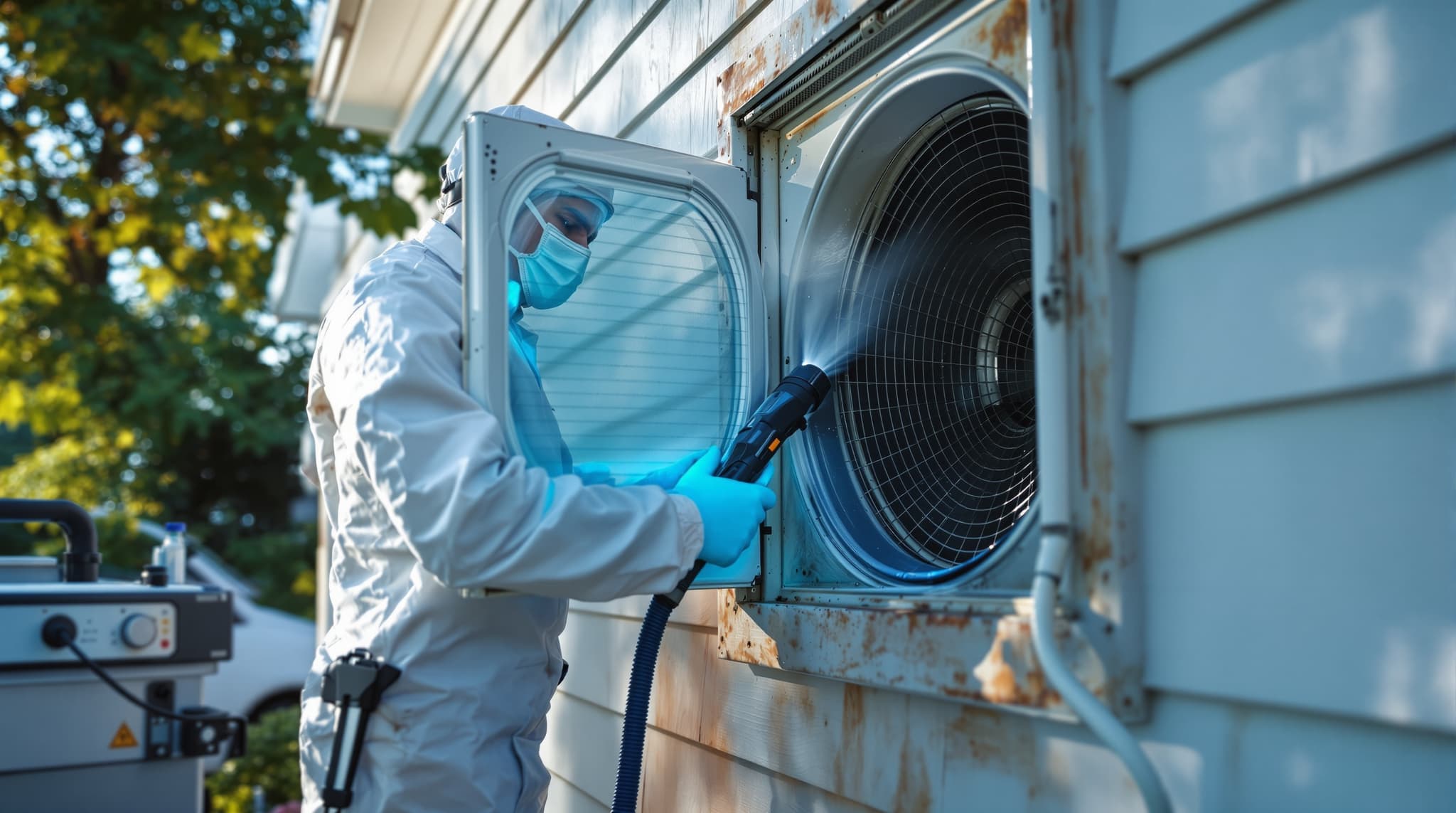
How often to clean a dryer vent
The National Fire Protection Association (NFPA) says to clean lint out of the vent pipe once a year. It also says to do it sooner if clothes start taking longer than normal to dry.
The lint screen is a separate job. Clean it before or after every load. Some lint always gets past the screen, and that is the lint that builds up in the vent.
Once a year is a baseline. The right schedule for your home depends on the vent itself and on how much laundry you do.
What makes a dryer vent clog faster
Some homes fill a vent with lint much faster than others. These are the usual reasons:
- A long vent run. The farther the air travels, the more lint settles along the way.
- Several bends. Every elbow slows the air and gives lint a place to collect.
- Heavy laundry use. A busy family fills a vent much faster than one person does.
- Pets. Pet hair adds to the lint in every load.
- Foil or plastic duct. The ridges trap lint. The duct can also crush behind the dryer.
- Roof vents. They are hard to reach and often clog right at the cap.
- Bird nests. Birds sometimes build nests in outside vent caps in spring.
Signs your dryer vent needs cleaning now
Do not wait for the yearly cleaning if you notice any of these:
- A normal load takes more than one cycle to dry.
- The dryer or the laundry room gets unusually hot.
- You smell something burning when the dryer runs.
- The outside vent flap barely opens while the dryer is on.
- Lint collects around the outside vent or behind the dryer.
- The dryer shuts off before the cycle ends.
If you smell burning, stop using the dryer until the vent has been checked.
Why a clogged dryer vent matters
Lint burns easily. The U.S. Fire Administration lists failure to clean as the leading cause of home clothes dryer fires.
Gas dryers add another risk. A blocked vent can push carbon monoxide back into the house. Keep a working carbon monoxide alarm near the laundry area and the bedrooms.
A clogged vent also costs money. Each load takes longer, which uses more energy and wears out the dryer sooner.

Dryer vents in Long Island homes
Many Long Island homes have the laundry in the basement. The vent often runs along the basement ceiling before it goes outside. Homes with a second-floor laundry often vent through the roof. Both setups can mean a long run with several turns.
Many building codes limit a standard 4-inch dryer duct to about 35 feet. Each 90-degree bend usually takes about 5 feet off that limit. A run close to the limit will need cleaning more often.
Townhouses and condos often have long vent paths or roof vents. Check with your building before you book, since some associations schedule vent cleaning for every unit.
Winter adds one more job. Snow can pile up against a low outside vent. Keep it clear so the dryer can breathe.
What you can do between cleanings
- Clean the lint screen after every load.
- Wash the screen with warm soapy water every few months if you use dryer sheets.
- Run the dryer and check that the outside flap opens and air blows out hard.
- Pull the dryer out once a year and look at the duct behind it.
- Replace crushed foil or plastic duct with rigid or semi-rigid metal duct.
- Do not overload the dryer.
Can you clean a dryer vent yourself?
A short, straight vent can often be cleaned with a brush kit from a hardware store. Unplug the dryer first. Shut off the gas too if it is a gas dryer.
Long runs, roof vents and runs with many turns are harder. A brush can pack lint into a clump instead of pulling it out. Those vents are usually worth a professional cleaning.
What a professional dryer vent cleaning includes
A professional cleaning covers the whole path the air travels. The dryer is pulled out and disconnected. The duct behind it is cleaned, or replaced if it is crushed.
The main vent run is brushed and vacuumed from end to end. The outside cap is cleared so the flap opens freely. Some technicians also measure airflow at the outside vent before and after the work.
Dryer vent cleaning on Long Island
We clean dryer vents across Nassau and Suffolk County. See our dryer vent cleaning service for what a visit covers. We also have local pages for dryer vent cleaning in Smithtown and vent and duct cleaning in Huntington.
Some homeowners book the dryer vent along with air duct cleaning so both get done in one visit. Not sure your ducts need it? Read the signs your air ducts need cleaning.
Ready to book? Call (631) 641-5548 to schedule a dryer vent cleaning.
Dryer vent cleaning questions
How often should I clean my dryer vent?
At least once a year for most homes. Clean it sooner if drying takes longer than it used to. Long vent runs and heavy laundry use also call for more frequent cleaning.
How often should I clean the lint screen?
Every load. Clean it before or after each cycle. A clean screen does not replace a vent cleaning, since some lint still gets past it.
Does a gas dryer need its vent cleaned more often?
The schedule is about the same. The difference is the risk. A blocked gas dryer vent can push carbon monoxide back into the house, so do not skip it.
How long does a dryer vent cleaning take?
Many take an hour or two. Long runs, roof vents and runs with many turns can take longer.